
Unfortunately, car theft can be a worry for vehicle owners. That is why we have put together 7 anti-theft tips to help you reduce the risk of becoming a victim of it.
It is worth noting that obtaining insurance is not always a given, be it household or motor. Vehicles are becoming riskier to insure as criminal technology advances; naturally, this is making insurers more wary – the long term effect of which is a shrinking motor insurance market. Cars that are commonly more difficult to insure are those that are modified, custom, high value or high performance, classic or rare, or of a high-end brand. For example, using data from the DVLA, Rivervale Leasing reports that Land Rover’s most expensive model, the Range Rover, was the second most popular target for crooks with 5209 stolen in 2022. Therefore, anti-theft precautions are welcomed by insurers as they show attempts at mitigating the risk.
1) Prevent keyless car theft
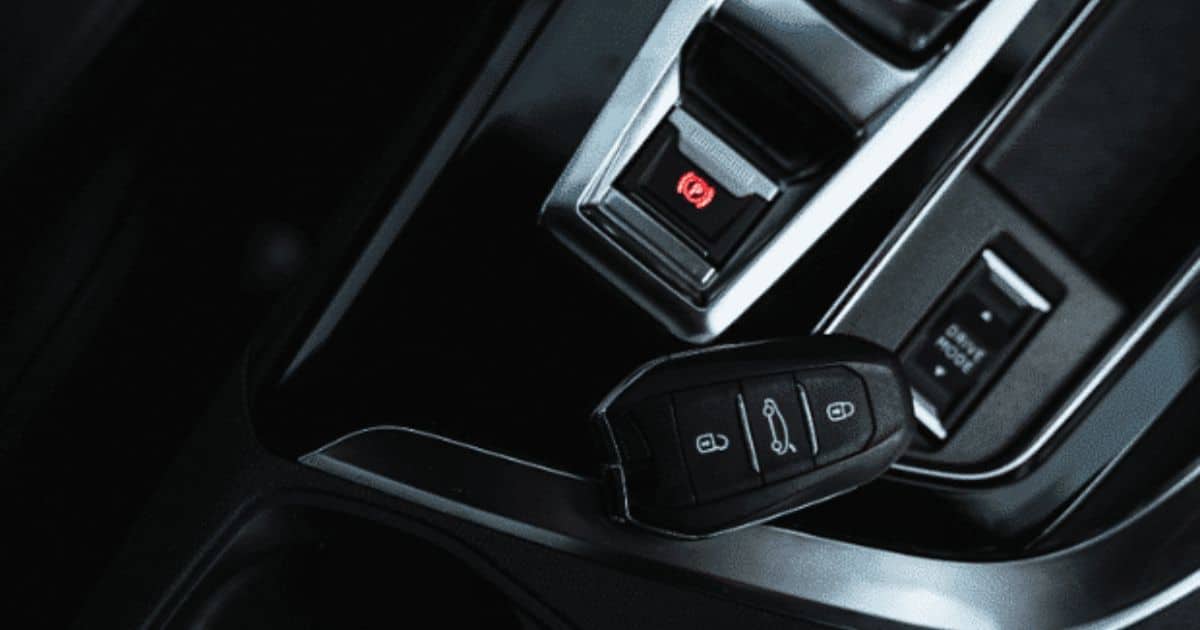
Keyless car theft, also known as relay theft, is a fast and easy way to steal a car. Usually, two people work together to execute on this; the signal from the key fob of a keyless car is captured by a specialist electronic (relay) device (positioned near the victim’s house) and is then transmitted to a receiver (positioned near the victim’s car) that fools the car into thinking that it is the key. This receiver can now unlock the car and be used to start the ignition and drive the car away, exploiting the safety precaution that some car manufacturers have put in place whereby the vehicle’s engine won’t cut off should the key fob be out of range.
What is even more worrying, is that some relay devices can pick up the signal from a key fob from over 100 meters away*, meaning it’s not just vehicles that are parked on the driveway that can be targeted.
You can find many videos showing just how quick and easy it is to steal a car through keyless car theft, such as the example below.
So, how can avoid this type of theft? Read our blog about Keyless Car Theft and how to help avoid it here.
Here are some extra tips on how you can prolong the prevention of this type of theft:
- When it comes to Faraday or signal blocking pouches, be mindful that some pouches can lose their effectiveness over time due to the interior magnetic wall breaking down with use. You can test the effectiveness of a pouch by placing your key fob in the pouch and pressing the unlock button while stood next to the car. If you can gain entry whilst the key fob is pouched then it is time to replace it.
- Be vigilant of people within close proximity of you, your home and your car. Moreover, make it a habit to inspect around your property and vehicle as relay devices can be planted and collected by criminals at any time.
2) Use Thatcham Security Certified (TSC) alarms or immobilisers
If you want to learn more about Thatcham and what do they do, you can read our blog about Thatcham Research here.
There are a variety of alarms and immobilisers that offer different levels of protection. Generally, most modern production vehicles have them fitted as standard, but classic cars, modern classic cars, and bespoke cars generally aren’t equipped.
It is recommended that you use approved and fully accredited specialists to fit these types of security systems to help ensure your device is fitted properly, adheres to insurer requirements and has a warranty.
3) Consider trackers
Should a car’s alarm or immobiliser fail to prevent a theft from taking place, a tracker can be a great way of locating and recovering a stolen vehicle. Tracking devices offer a real-time location using GPS (Global Positioning System) or VHF (Very High Frequency).
The GPS capabilities of a tracker can provide worldwide tracking, though it is worth bearing in mind that its signal strength can be weak. On the other hand, VHF capability is an incredibly precise technology and is even used by our police force**. However, both play an important part in a tracker and most trackers feature both elements. The VHF element is only activated when a vehicle is reported stolen, meaning thieves could travel a fair distance before it is enabled; this is where the GPS element can instead reveal its whereabouts.
VHF also has the ability to locate a vehicle if it is stored underground or in a garage. It is also undetectable and cannot be jammed***, meaning that your vehicle still has the ability to be tracked even if thieves have compromised the GPS element.
With trackers, it is worth bearing in mind that just as a tracker can be installed, it can also be removed, therefore it is recommended to have the tracker professionally installed and hardwired into a hidden place within the vehicle, this makes it more difficult for it to be tampered with or removed (though not impossible).
4) Invest in locks
Deterrents such as steering wheel locks and handbrake to gear stick locks can help towards making it more difficult for thieves to steal your vehicle. Plus, they act as an effective visual deterrent too as they show the criminal that extra time will be needed to remove them.
Other deterrents include garage defenders, great for added security for everything else in your garage too, not just your car, and parking posts, which act as another barrier to taking the vehicle.
5) Seek out secure parking
Probably one of the most obvious suggestions, but one that is quite often overlooked, is secure parking. Here are some options to consider depending on your whereabouts:
- Should only on-street parking be available, try to park in a well-lit position, preferably with CCTV within the area.
- When choosing a car park, aim for those with a car park attendant or with barrier entry and exit points.
- If you have a garage or driveway, try to maximise their usage, as these are generally safer than on-street parking. It may be worth noting parking websites and apps such as Park On My Drive, JustPark and YourParkingSpace, where some people rent out their driveways so that drivers can utilise them when out and about, which, again, tends to be more secure from a theft perspective.
- When your vehicle is left unattended, make sure to hide all valuables out of sight – it doesn’t take a lot purely to gain entry.
6) Implement CCTV
CCTV (closed-circuit television) can help in safeguarding your property by deterring criminals as it can document them committing the crime but also may give the impression that you are likely to have other security measures in place. Although often limited, CCTV also has the potential to provide evidence in the event a crime does take place.
Arguably more useful are the more modern CCTV systems which offer remote monitoring via a paired app so that you can access the camera’s live stream wherever you are. Some systems can also connect to your home’s intruder alarm so that if the alarm is triggered, you can receive an instant notification; you can then view the footage to see what triggered it and determine what action to take.
Compared to a few years ago, the cost associated with having a CCTV system professionally installed is now relatively inexpensive and is considered cost-effective when weighing up the outlay of the crimes it could help prevent.
7) Mark your vehicle
Vehicle security marking kits are also a great deterrent to thieves as the self-etch labels visually show that your vehicle is registered on The ISR (International Security Register). The idea behind the marking of a vehicle is that, should the vehicle be stolen, the markings can be validated immediately, speeding up the proof of ownership of the vehicle.
Self-etch labels can easily be applied to the vehicle and should be stuck on key positions of the vehicle where they are visible. Working with UV, even if the label is removed, the UV stays on the vehicle and will still reveal the contact information.
Depending on the kit, such as the NoGo CarMark, QR code labels are also supplied to be covertly placed around the vehicle, adding another layer of information for police. When used, these QR codes can quickly reveal who the latest owner of the vehicle is as they link to the vehicle chassis and registration number.
We are here if you need us
The advice above may seem over the top, but prevention really is key. We hope that everything we have detailed above helps you to prepare for or, ideally, prevent these types of crimes from happening to you.
Making sure you have appropriate insurance cover in place should also be a priority so that should the worst happen, you can rest assured that you have car insurance you can rely on.
If you have a high-value car that needs insuring or you’d just like some independent insurance advice, contact our dedicated Art & Private Clients team on 01653 602634 or at affinity@mcclarroninsurance.com.
A benefit for McClarrons clients
On Board Defence, an industry leader in supplying innovative solutions for vehicle owners and operators, are offering McClarrons clients who purchases a NoGo Immobiliser, NoGo Track S7, NoGo Track S5 or NoGo Track S5 Plus using a unique URL link assigned to McClarrons, two free items (once the installation of their purchase is complete). The two free items are the NoGo FobStopper and NoGo CarMark. To purchase any of the aforementioned items and to get your two free items, contact us at enquiries@mcclarroninsurance.com.
Source:
* https://leasing.com/guides/relay-car-theft-what-is-it-and-how-can-you-avoid-it/
** https://www.driverbuddyapp.com/advice-and-tips/why-you-should-always-buy-a-vehicle-tracking-device/
*** https://www.trackerfit.co.uk/blog/what-is-vhf-car-tracking