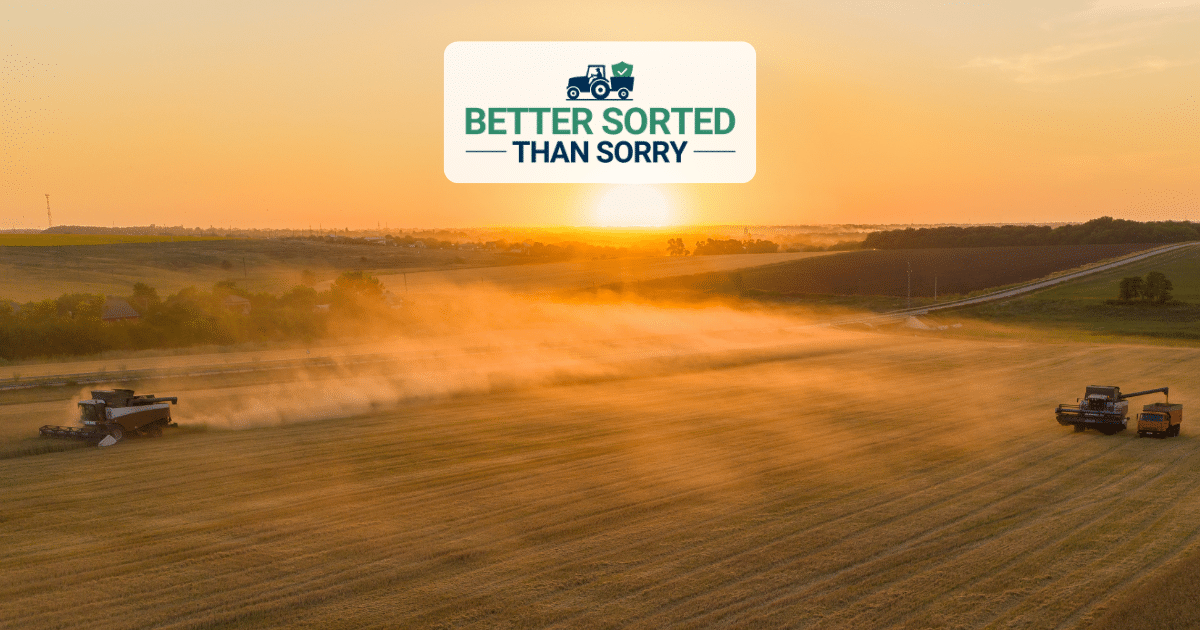
Harvest is one of the busiest and most demanding periods in the farming calendar. Long hours, tight weather windows, rising temperatures, machinery operating almost continuously, and the pressure to get crops safely in the shed all combine to increase risk.
As part of our Better Sorted Than Sorry campaign, we have brought together guidance from the Health and Safety Executive (HSE), fire services and agricultural safety organisations to help farms prepare for the harvest season and reduce the likelihood of preventable losses.
Alongside this article, we’ve also created a downloadable Harvest Summer Safety & Fire Prevention Checklist that can be saved, shared with staff and contractors, and used through the season to keep things on track and identify potential gaps. While no checklist can eliminate every risk, taking a proactive approach can make a significant difference when conditions become challenging.
1. Pre-Harvest Planning & Risk Assessment
When conditions are dry and workloads are increasing, small issues can quickly become major problems. Taking time to review your risks before machinery enters the field can help prevent avoidable incidents later.
Fire Risk Assessment
A formal fire risk assessment helps identify vulnerabilities before they become emergencies. It encourages you to consider where a fire could start, how quickly it might spread, and what steps can be taken to reduce the likelihood of an incident occurring.
Areas worth reviewing include:
- Potential ignition sources
- Combustible materials and storage areas
- Vulnerable buildings and infrastructure
- Emergency access routes
- Water supplies
- Responsible persons and emergency contacts
During prolonged periods of hot, dry weather, conditions can change rapidly. Reviewing your assessment regularly throughout harvest can help ensure it remains relevant and effective. Where contractors are involved, ensuring they understand site-specific risks, emergency procedures and access arrangements is crucial (Introduction to fire safety – HSE) in keeping everyone safe.
Emergency Response Planning
No farm wants to deal with a fire but knowing what to do if one occurs can help reduce the impact. A written emergency plan should clearly identify:
- Exact field access points
- Grid references or what3words locations
- Water supply locations
- Livestock evacuation plans
- Machinery shut-down procedures
- Assembly points
Having this information readily available can save valuable time during an emergency, particularly when emergency services are unfamiliar with the site. Display emergency contact information in vehicles, workshops and key buildings, and ensure staff and contractors know where to find it.
Working With Your Local Fire Service
Fire crews can respond far more effectively when they already understand the challenges of your site. If you have large straw storage areas, difficult access routes, remote fields or specialist water supplies, consider making your local fire service aware ahead of harvest.
It is equally as important to ensure that gateways, tracks and access points remain clear throughout the season. In an emergency, even small delays can have significant consequences.
For further local information, visit: Farms – North Yorkshire Fire & Rescue Service or Humberside Fire Farm Safety.
2. Machinery Fire Prevention
Machinery is at the heart of most harvesting operations but it is also one of the most common sources of ignition. Dust, chaff and crop residue naturally accumulate around hot engine components, moving parts and exhaust systems. Combined with long operating hours and high temperatures, these conditions can create the perfect environment for a fire to start.
Daily Machinery Inspection
Daily inspections can help identify issues before they develop into larger problems. Particular attention should be given to:
- Belts showing signs of wear or friction
- Hydraulic hoses and fittings
- Damaged electrical wiring
- Engine bays and exhaust areas
- Guards and covers
- Turbochargers and exhaust systems
Cleaning machinery should be viewed as an essential part of the working day rather than an optional extra. Removing dust, straw, oily residue and debris from combines, balers and tractors can significantly reduce fire risk.
Refuelling also deserves careful attention. Engines should always be switched off and allowed to cool before refuelling. Fuel bowsers should be positioned away from active harvesting areas and spill kits should be readily available for use should an accident occur.
3. Fire Suppression Equipment
Even with the best preparation, incidents can still occur. Having the right equipment available can help contain a fire before it becomes uncontrollable.
Combines and balers should be equipped with suitable extinguishers and these should be checked regularly throughout the season. Operators should also understand how to use them safely and confidently, including seasonal labourers. Where possible, consider maintaining mobile water supplies in operational areas and ensuring pumps, hoses and access routes remain functional.
For higher-value machinery, automatic fire suppression systems may also be worth considering. While they represent an additional investment, they can provide valuable protection where machinery values and potential business interruption costs are significant. For further information, we recommend reading – Farmers Weekly’s article on the benefits of fitting such kit ahead of harvest.
4. Field & Crop Management
Field conditions, crop management decisions and storage arrangements can all influence how quickly a fire spreads, how difficult it becomes to control and the size of a potential loss.
During periods of extreme heat, strong winds or drought conditions, additional vigilance may be required. Monitoring weather forecasts and adapting operations where practical can help reduce exposure to unnecessary risk. Creating fire breaks around standing crops, straw stacks and buildings can all help slow the spread of fire.
5. Staff Safety & Training
Even the best procedures can fail if individuals are unsure of what to do in an emergency or are unaware of the risks around them.
Before harvest begins, ensure operators understand:
- Emergency shutdown procedures
- Fire extinguisher use
- Evacuation arrangements
- Incident reporting procedures
Where contractors or labourers are involved, do not assume they understand your site, hazards or emergency arrangements; a short briefing before work begins can prevent misunderstandings or misuse later on.
Fatigue caused by long harvest days can reduce concentration, cause slow reaction times and increase the likelihood of mistakes. Encouraging breaks, rotating operators where possible and recognising the signs of tiredness can help keep people safe during demanding periods.
6. End-of-Day Checks
Fires may occur after machinery has been parked and operators have gone home. A thorough shutdown routine can help identify potential problems before they develop overnight. At the end of each day:
- Check for smouldering debris
- Inspect bearings and brakes
- Park machinery away from standing crops and dry vegetation
- Secure workshops and fuel stores
- Isolate electrical systems where appropriate
Spending an extra few minutes carrying out these checks can provide valuable peace of mind and reduce the risk of returning to a serious incident.
Better Sorted Than Sorry
Harvest is a period when arable farms operate under immense pressure.
Harvest fires may begin with something relatively small: a bearing that wasn’t checked, debris that wasn’t cleaned away, a hydraulic leak that went unnoticed, or a tired decision made at the end of a long day.
The purpose of this guide isn’t simply to help you meet your legal obligations, it’s about helping protect your people, machinery, crops and business from avoidable losses.
Because when harvest pressure builds, it often only takes one thing to change everything.