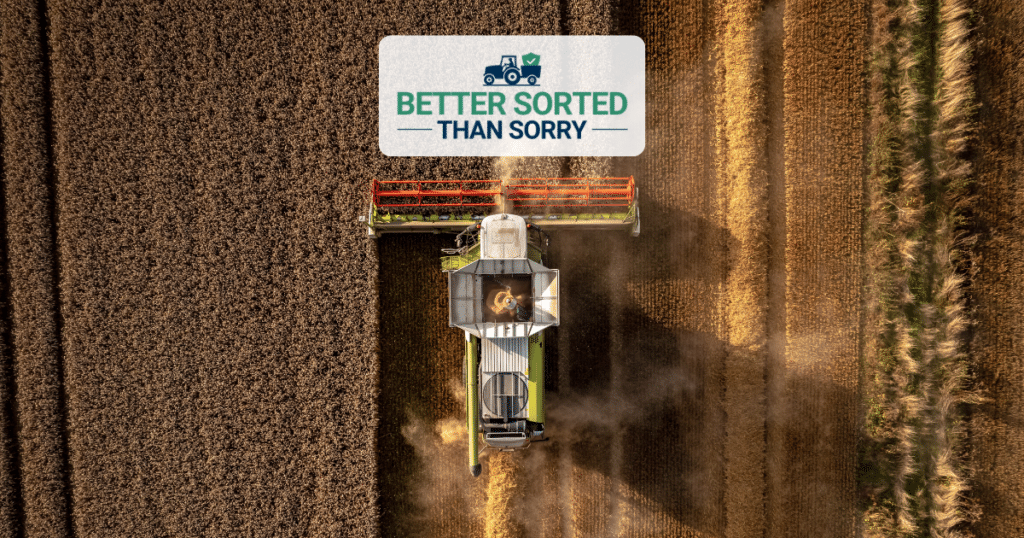

As part of our Better Sorted Than Sorry campaign, we revisit this blog focusing on one of the most significant risks facing farms during harvest: machinery-related accidents.
In this blog, we offer some simple but key reminders about agricultural machinery safety as we enter a period of increased machinery use – harvest.
Harvest places enormous demands on both people and machinery. Long days, tight weather windows, mounting pressure and equipment operating almost continuously, can quickly expose weaknesses.
It is the responsibility of an employer to ensure that workers are aware of safe working practices and to assess and minimise workplace risk. Risk management can benefit everyone involved by reducing the likelihood of incidents and ill health among workers as well as preventing business interruption and inefficiencies. Not only this, should you be found negligent, or the HSE find that you are not meeting your responsibilities, you could be fined and, in some cases, they may close part of your site and stop trading.
Machinery accidents often occur as a result of the following: failing to follow safe procedures and protocols such as ‘Safe Stop’, a lack of operator training, and poor maintenance and checks of machinery and their safety devices (www.hse.gov.uk).
Modern agricultural machinery is designed to improve productivity and efficiency but it also consists of lots of moving parts that can cause serious or fatal injuries – augers on combine harvesters, twine mechanisms on balers and power take-off shafts on trailers, there are preventative measures that can be taken to reduce the likelihood of an incident. These include but are not limited to:
Training
Good training can be one of the most effective ways to reduce machinery-related incidents. Clear working procedures can help ensure tasks are carried out consistently and safely, while also reducing downtime, improving efficiency and helping operators respond appropriately when problems arise.
Before carrying out maintenance, adjustments or clearing blockages, machinery should always be switched off, all moving parts allowed to come to a complete stop, and any hot components given time to cool. Many serious injuries occur when operators attempt to resolve faults while equipment is still running, often in an effort to save time during busy periods.
This is why the ‘Safe Stop’ procedure remains so important. This is something that should be engrained into the mindset of all employees. Maintaining awareness of the procedure could prevent some of the fatal accidents that occur when operators attempt to clear blockages and correct faults whilst machines are running.
Anyone expected to operate machinery should receive appropriate training and be competent to use the equipment safely. This applies not only to permanent employees but also to contractors, seasonal workers and casual staff who may be unfamiliar with the machinery, the farm layout or site-specific procedures. There are many resources for training workers on machinery, whether this is online, through the manufacturer of the machinery or training organisations.
What is the Safe Stop Procedure?

The Safe Stop procedure is a crucial safety practice in agricultural machinery safety operations. It consists of four simple steps:
- Engage the handbrake
- Put the controls in neutral
- Switch off the engine
- Remove the key
This procedure should be followed before leaving the driver’s seat, when anyone approaches the machine, and before carrying out any maintenance, adjustments, or clearing blockages.
Safety Measures
Serious machinery injuries can occur when safety features are missing, damaged, or intentionally bypassed. Guards, covers, emergency stop mechanisms, and other protective devices are designed to prevent contact with dangerous moving parts and should always be fitted, secure, and in full working order before machinery is used. While it can be tempting to remove or override safety devices to save time, doing so can significantly increase the risk of serious injury or worse. Appropriate clothing and personal protective equipment (PPE) also play an important role in reducing risk. Loose clothing, jewellery, and untied hair can easily become caught in moving machinery, particularly around power take-off (PTO) shafts, belts, and rotating components. Operators should wear clothing suitable for the task and ensure any required PPE is used correctly. Read more here – Using personal protective equipment (PPE) to control risks at work: Using the right type of PPE – HSE. Depending on the activity being undertaken, this may include steel toe-capped footwear, gloves, eye protection, hearing protection, high-visibility clothing, or other specialist equipment.
Agricultural Machinery Safety Checks
It should be a force of habit to carry out pre-start checks before working with any agricultural machinery, to ensure that it is in good working order and safe to use. There are online templates available, such as this farm safety checklist by Yellow Wellies, as well as software and apps such as MeritAgCheck from our risk management partners, Safety Revolution, which collates all the daily checks that need to be done and helps you document them; good evidence to have in the event of a claim and to help you meet HSE and LOLER requirements.
These checks can help identify mechanical defects which can be both dangerous and costly if not corrected; they also provide the opportunity for guards and protective devices to be checked, simple measures that are often missed yet make a drastic difference when incidents occur.
You can also view BAGMA’s (British Agricultural and Garden Machinery Association) Farm Vehicle Health Check booklet for guidance. HSE also provide agricultural information sheets which include a breakdown of safety guidance on a range of different machines.
How McClarrons can help with Farm Insurance
If you would like to know more about what you can do to protect your farm, workers and livelihood this summer, please do not hesitate to contact our specialist Farm Insurance Team at farm@mcclarroninsurance.com or on 01653 609152.
Better Sorted Than Sorry
We link this machinery safety blog into our Better Sorted than Sorry campaign as many machinery accidents happen as pressures build, attention slips and small issues are left unresolved. A loose guard, a missed inspection, a blockage that seemed quicker to clear while the machine was running.
The purpose of good machinery safety isn’t simply to satisfy regulations; it’s about protecting the people, businesses and livelihoods that depend on that equipment every day.