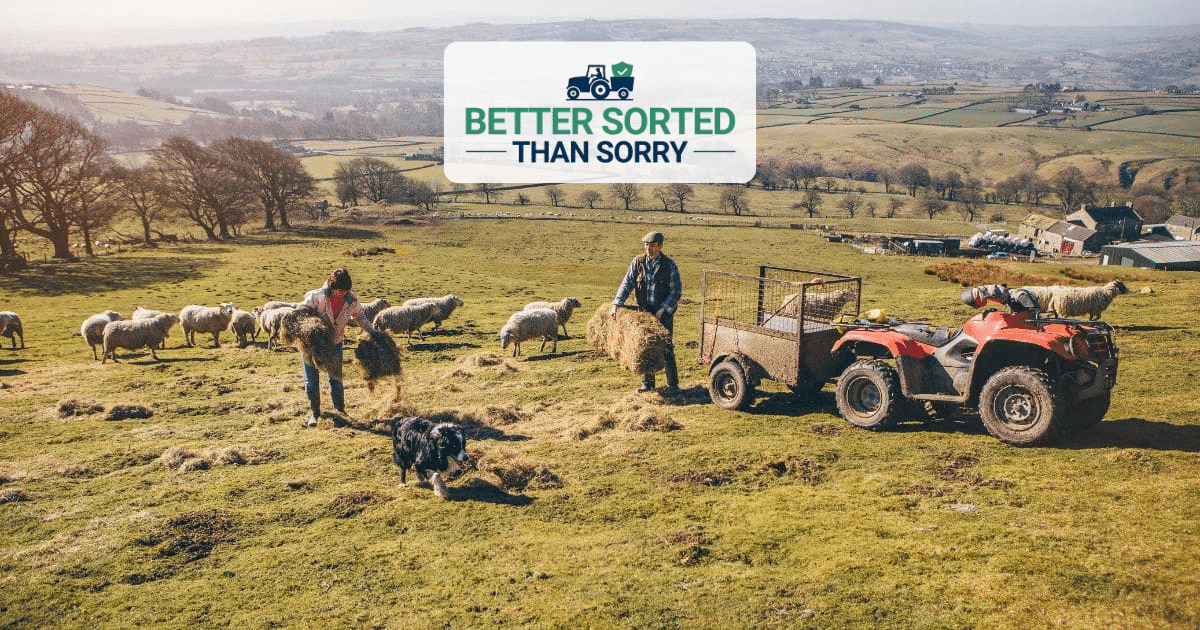
Farming remains one of the most dangerous industries in the UK. According to the latest figures from the Health & Safety Executive (HSE), agriculture, forestry and fishing continues to have the highest fatal injury rate of any major industry sector. The number of fatalities in 2025/26 has surpassed 2024/25’s recorded count of 23 worker fatalities across the sector, reaching 30 fatalities in just under a year.
The most common causes of fatal accidents continue to involve moving vehicles, livestock, falls from height, machinery, and falling objects. Older workers are also disproportionately affected, with people aged over 45 accounting for the majority of fatal injuries in recent years*.
While farming will always involve risk, many serious incidents are preventable through better planning, regular maintenance, training and stronger safety procedures.
As a part of our Better Sorted than Sorry campaign and with Farm Safety Week in mind, we look at how the top 3 causes of fatal accidents across all industries can be reduced, as well as sharing some other useful safety guidance.
Farm Safety Tips:
Falls from a height
In the HSE’s Farmwise publication, they suggest that before carrying out work at height on a roof, you should:
- Plan the work that needs to be completed
- Allow enough time to carry out the work
- Consider the environmental conditions, such as light levels, ice, wind and rain
- Ensure everyone is aware of the precautions to follow when working at height
- Fix a prominent permanent warning notice at the approach to any fragile roof
- Do not walk on fragile materials such as asbestos, other fibre cement sheets, roof lights or glass
- Never ‘walk the purlins’ or ‘walk the line of the bolts’
- Roof ladders or crawling boards should span at least 3 purlins and be at least 600mm wide or more, when the work requires
- Take precautions to prevent a person falling from the ladder or a board by making use of edge protection or safety harnesses
- Roof ladders should be positioned securely, with the anchorage bearing on the opposite side of the roof.
Please note that the above is not an extensive list, you should review the complete guidance, here before carrying out any work.
Reducing time working alone can also be beneficial. If someone else is around and aware of where you are working, they can check on you and assist should anything go wrong.
Moving Vehicles
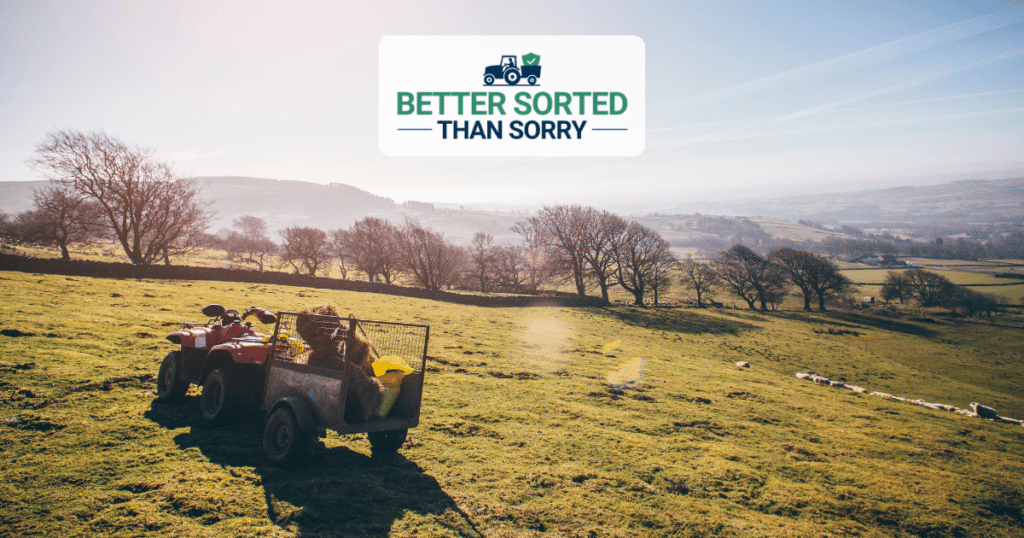
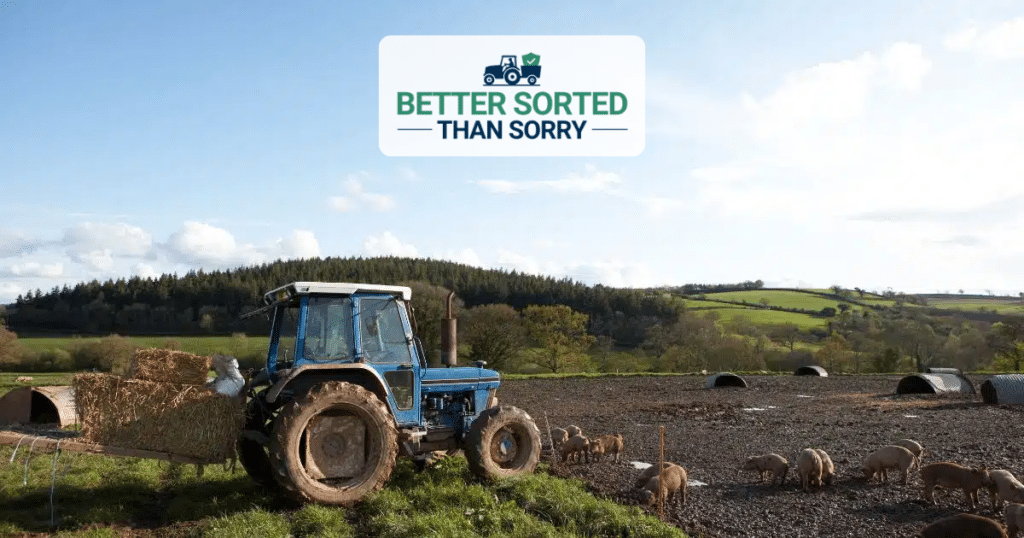
Vehicles remain one of the leading causes of serious injuries and fatalities in agriculture. Tractors, telehandlers, loaders, ATVs, trailers and visiting vehicles all present significant risks.
Many incidents occur due to poor maintenance, inadequate training, unsafe site layouts or simple assumptions about who is responsible for checking equipment. Regulations such as LOLER and PUWER require certain machinery and lifting equipment to be properly maintained, inspected and used safely but good vehicle safety goes beyond compliance.
The HSE’s Farmwise guidance recommends focusing on three key areas: Safe Vehicle, Safe Driver and Safe Site.
Safe Vehicle:
- Check vehicles are capable of safely carrying out the jobs to be done
- Carry out daily checks of vehicles and ensure faults are repaired promptly
- Maintain machinery in accordance with manufacturer recommendations.
- Check that vehicles and machines are fitted with roll-over protective structures (ROPS) and seatbelts, should they be at risk of overturning.
Safe Driver:
- Ensure drivers are medically fit to drive and operate machinery
- Ensure all drivers are properly trained
- Ensure unauthorised people are not allowed to drive
- Ensure drivers are aware of how to safely enter and exit all the vehicles/machinery they use
- Do not allow passengers to ride in or on vehicles unless they are sitting in a passenger seat, in a safe position and without being able to impede the driver (their sight included) or accidentally come into contact with the machine controls.
It is also important to ensure that any safety mechanisms on machinery and vehicles are utilised. Unfortunately, we have heard of instances where safety mechanisms have been over-ridden on machinery to make work easier or quicker, which has ultimately led to serious injury. Ensuring operators and drivers are aware of the safety measures and how to use equipment correctly is paramount to helping protect them and others.
Safe Site:
- Make sure that vehicles and pedestrians are separated on site, as far as possible
- Ensure that any drivers visiting your farm are aware of your rules, including where they can park, any one-way systems, where pedestrians may be and of any areas they are not permitted to enter
- Plan vehicle routes so that there is minimal need to reverse, e.g. add turning circles or implement one-way systems around the site
- Ensure traffic routes are adequately maintained and lit
- Use clear signs to make people aware of speed limits, one-way systems, any areas that should not be entered and ensure that these are consistent with the Highway Code
- Signs for the general public can also be helpful to ensure they and you are not harmed due to their lack of awareness or their unexpected presence.
The HSE offer additional information and guidance on how to keep safe when working with agricultural machines and vehicles, here.
Moving Objects
While vehicle movements present significant risks on farms, injuries can also occur when materials, equipment or loads are not stored, handled or secured safely. Whether loading materials, stacking equipment, handling bales or working around elevated loads, seemingly routine tasks can quickly become dangerous if objects become unstable or fall unexpectedly.
Reducing these risks often comes down to a combination of suitable equipment, good storage practices and appropriate personal protective equipment.
- Check that drivers of lift trucks and loaders are protected from falling objects
- Ensure workers are using the correct head protection such as hard hats, safety helmets or bump caps should they be at risk from falling objects in their work
- Ensure workers are using the correct safety boots and shoes; consider protective toe caps, penetration-resistance, mid-sole wellington boots or specific footwear required for the job (e.g. chainsaw boots)
- Use appropriate methods and locations for storing objects to help ensure their stability and security.
Lone Working
Working in farming can often mean working alone; here we highlight a couple of simple farm safety tips to help make this safer.
Use a buddy system – using a buddy system can be invaluable. Dangerous tasks should not be performed alone, nor should such work be carried out in an isolated area. Having someone with you can save you – your buddy may be able to help you with the task to make it safer or, should the worst happen, can help by turning off a machine, getting you to safety or calling the emergency services.
Communication – Mobile phone signal can be patchy at the best of times; it is important to have other communication methods available to you. If you are going to carry out work alone, you should make sure someone is aware of where you are and what you are doing so that if you are longer than expected, they know to come and check on you. Walkie Talkies can also be useful where phone signal or battery cannot be relied upon. Making sure someone is aware of your whereabouts and having the ability to contact someone, should you need to, is crucial to you, and others, keeping safe on farm.
We are in no doubt that you have heard most, if not all, of this advice before but it remains that Agriculture, Forestry & Fishing is the second most dangerous industry to work in in the UK, and so a reminder of some of the key steps you can take to help reduce these statistics can’t harm. Taking the time to sort these things before an incident has the chance to arise can be vital – Better Sorted Than Sorry. The Health & Safety Awareness of you, your workers and anyone else who lives on-site is paramount.
Specialist support
We highly recommend using a specialist Health & Safety adviser, such as Safety Revolution – to review your risk management and health and safety procedures. They can help you to ensure you are working in, and providing, a safe place to work and meeting regulatory requirements.
You can find out more about Safety Revolution, here.
They also provide a free app, MeritAgCheck, which is available to download from the App Store. MeritAgCheck can help you fulfil legal LOLER and PUWER requirements and establish safer practices around your machinery use; it helps you to record machinery checks, document compliance and manage defects, all through the simple, user-friendly app.
Find out more about MeritAgCheck here.
How McClarrons can help
At McClarrons, it is our job to ensure you have the right insurance in place to protect you and your business should the worst happen. With over 35 years’ experience working in the agricultural insurance sector, we can arrange farm insurance for your specific requirements, activities, and company set-up.
Some of the most relevant covers when we are looking specifically at Farm Safety are:
- Personal Accident – this provides cover should you, or an employee, suffer from a serious injury or death as the result of an accident. It can also protect you and/or your family for loss of income, helping with bills and other expenses.
- Key Man Cover – this provides cover for the expenses involved in finding and recruiting an equally capable member of staff to assist you on farm should an employee suffer an injury that causes them to be unable to work for a period of time.
- Rural Protect/Management Liability – this can assist in protecting companies by reducing the impact of litigation and providing legal representation at official investigations and court hearings, should an accident occur.
- Public Liability – this looks to cover you should legal action be taken against you by a third party. This could be in respect of personal injury or damage to property sustained by a member of the public during the course of your work, for example. Public Liability insurance can cover your defence costs and any potential compensation if a claim is successful against you or your company.
- Employers’ Liability – this protects against legal action from your employees in respect of an accident or injury suffered while at work. Should an employee launch a claim for compensation, for example, the cover can provide defence costs as well as any potential compensation (subject to the policy’s T&Cs).
Better Sorted Than Sorry
Recent industry reporting has highlighted growing concern around the pace and frequency of serious farm incidents. In 2025, Farmers Weekly reported a “disturbing rise” in agricultural fatalities, with industry leaders warning that fatigue, labour shortages, workload pressure, and financial stress may all be contributing factors.
The report highlighted incidents involving machinery, falls from height, collapsing equipment, and workers trapped beneath vehicles – many ultimately involving risks that are already well understood within the industry.
When workloads increase and pressure builds, it’s often the small things that are easiest to overlook. That’s the thinking behind our Better Sorted Than Sorry campaign. While no farm can remove risk entirely, taking time to properly maintain equipment, review safety procedures, carry out inspections, and avoid temporary fixes being left as such, can make a significant difference.
Better Sorted Than Sorry isn’t about telling farmers how to farm, it’s about recognising the realities of the job and encouraging small preventative actions before they become costly problems.
At McClarrons, we understand the pressures facing modern farming businesses and the importance of having the right support in place when things don’t go to plan. For a free review of your current farm insurances, please contact our dedicated Rural Insurance Team on 01653 609152 or at farm@mcclarroninsurance.com.