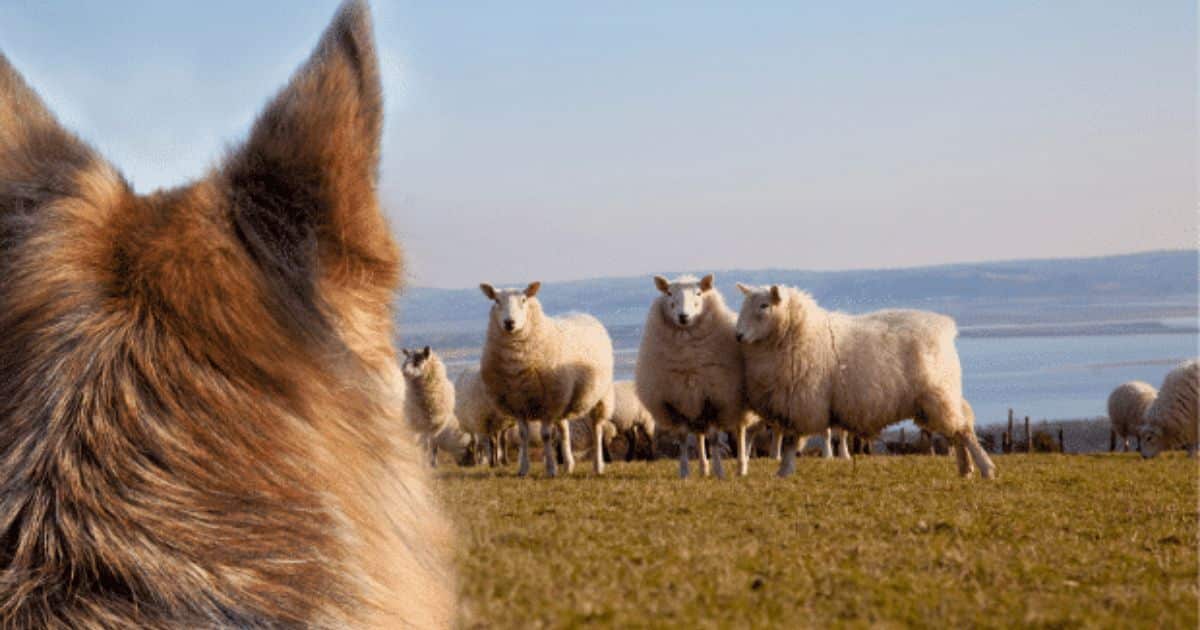
Shepherds, farmers and livestock owners are increasingly facing the difficult problem of dog attacks on livestock, especially sheep. This is a major issue as it can lead to significant financial losses as well as emotional distress for owners.
People can often forget that while dogs are classed as property, livestock is categorised as livelihood. These farm animals are valuable assets and represent both current and future income for farmers. That is why we go on to outline the drastic financial and mental implications that it has and provide some pointers on what farmers can do to help prevent worrying.
The financial implications
A farmer’s earnings can be tarnished as worrying can lead to an animal becoming frightened or stressed enough to cease production of its produce, skip the reproduction cycle, abort its unborn, or run away. This then results in disruption to the business’s earning potential, uncertainty for partners relying on produce, and damage to the business’s reputation.
In some cases, an animal may become permanently injured or killed, leading to further expenses and hardship for the owner. In the worst-case scenario, livestock worrying can cause the farmer to have to cull the group, which is both costly and emotionally draining. When the animal is injured, the owner must consider whether treating the injury, which can lead to expensive vet bills, is the best way forward. This can also then create a domino effect if the animal cannot be salvaged, as the farmer would now need to pay for euthanasia. Once dead, or if the animal has been killed already, the owner is legally responsible for the correct disposal of their fallen stock (dead livestock) without ‘undue delay’*. They must cover the costs of having the animal collected, identified, and transported by an approved transporter and disposed of by a knacker, hunt kennel, maggot farm, incinerator, or renderer. All this equates to a huge financial outlay that the livestock owner could really do without, especially under the current financial pressures the agricultural sector is facing.
This is why we would recommend that farmers and livestock owners speak to our farm insurance specialists so that we can make sure they have adequate insurance cover in place, and should there need to be a claim for expenses following a livestock worrying incident, our dedicated in-house claims team can step in and work on the farmer’s behalf to provide a fast and fair settlement. We would also encourage rural businesses to seriously consider Business Interruption Insurance to help them bounce back after recovering consequential losses.
Mental impact
The exhaustion from dealing with an incident will, of course, impact the mental health of any farmer who is left to pick up the pieces, not to mention the stress that comes with the financial implications.
The National Sheep Association’s ‘Sheep worrying by dogs survey 2022’ reported that over 50% of respondents said sheep worrying incidents ‘severely’ impacted their mental health, which is bad enough when you consider that it was only in 2021 when we told you about RABI’s Big Farming Survey reporting that 36% of farmers are experiencing some form of depression or anxiety. The report also shows that although financial loss had an impact on their mental health, it was mostly the thought of hard work going to waste, anger and anxiety that affected respondents most.
What can livestock owners do to prevent livestock worrying?
Whilst much of the responsibility for reducing the risk of livestock worrying sits with dog owners, there are things farmers and livestock owners can do to help prevent attacks too. Farmers and livestock owners are advised to keep their animals secure from both owned and stray dogs, and other pests. Here are a few steps that can be taken to reduce the risk of livestock worrying on the property:
- Make sure you have fencing in place to keep predators away; use sturdy materials like strong wooden posts with high-grade wire mesh to build a tall enough fence (at least 5 feet), and perhaps think about electric fences for an extra layer of protection.
- Keep your animals in secure shelters at night
- Use guard dogs to help protect your flock, and consider farm guardians with a territorial and high-alert nature such as donkeys or llamas, which are commonly used by farmers in countries abroad and in America
- Make sure you are aware of any predators in the area and act quickly if you notice any signs of distress in your flock
- Educate others and dog owners about the issue. Use social media and word of mouth to help spread the message.
- Take photos, or fit CCTV around your farm, to evidence and prove any acts of worrying. Although this will not necessarily prevent anything from happening, it can help when claiming or building a case against the dog owner in question.
We are here if you need us.
At McClarrons, it is our job to ensure you have the right insurance in place should the worst happen.
With over 35 years of experience, we can arrange insurance for farms and other rural businesses and our covers can include comprehensive protection for your livestock or produce. Find out more about the type of farm insurance we can provide.
We don’t just stop at insurance; we are here to support and assist our clients throughout the year. With a network of partners who are specialists within the farming sector, we will utilise and draw upon their expertise to offer you the support you need.
For a free review of your current farm insurances, or if you’d just like some advice, please contact our dedicated Rural Insurance Team on 01653 609152 or at farm@mcclarroninsurance.com.
Source:
* https://www.gov.uk/guidance/fallen-stock
** https://www.nationalsheep.org.uk/workspace/pdfs/2022-nsa-sheep-worrying-results_1.pdf