
After an exceptionally dry summer, heavy rainfall might not be the first concern that comes to mind. But as we move into autumn, conditions can change quickly, making it worth looking at how prepared your farm is for wetter weather.
July 2026 was the driest July on record in England, with just 10% of the long-term average rainfall recorded. Drought conditions have continued across much of the country, and recent rainfall has not been enough to fully replenish water resources.
While the dry conditions have brought their own challenges, heavy rainfall can still cause problems when it arrives. Dry or compacted ground may not absorb intense rainfall as quickly, increasing surface water runoff. Drainage can become overwhelmed, fields and access routes can quickly become waterlogged, and buildings and equipment may be exposed to water damage.
As part of our Better Sorted than Sorry campaign, we are looking at some of the practical checks that can be made now, before wetter weather becomes a problem.
Check your drainage
Drains, ditches, culverts and gullies all play an important role in moving water away from buildings, yards and fields. During periods of heavy rainfall, existing blockages or damage can quickly become a much bigger issue.
Check for accumulated leaves, mud, silt and other debris, particularly around areas where water tends to collect. It’s also worth looking at ditches and watercourses for signs of erosion, blockages or overgrown vegetation that could affect the flow of water.
If there are areas of the farm that have flooded in the past, these are a good place to start. Understanding where water tends to collect and how it moves across the farm can help highlight potential problems before they become more difficult to deal with.
Look over roofs, gutters and downpipes
Autumn is a good time to check farm buildings for damage that could become more problematic once the weather turns wetter and windier. Look for damaged or loose roof sheets, gaps or areas where water could get in. Gutters and downpipes should be clear of leaves and debris and able to direct water away from buildings.
This is particularly important where buildings are used to store machinery, feed, electrical equipment or other items that could be damaged by water.
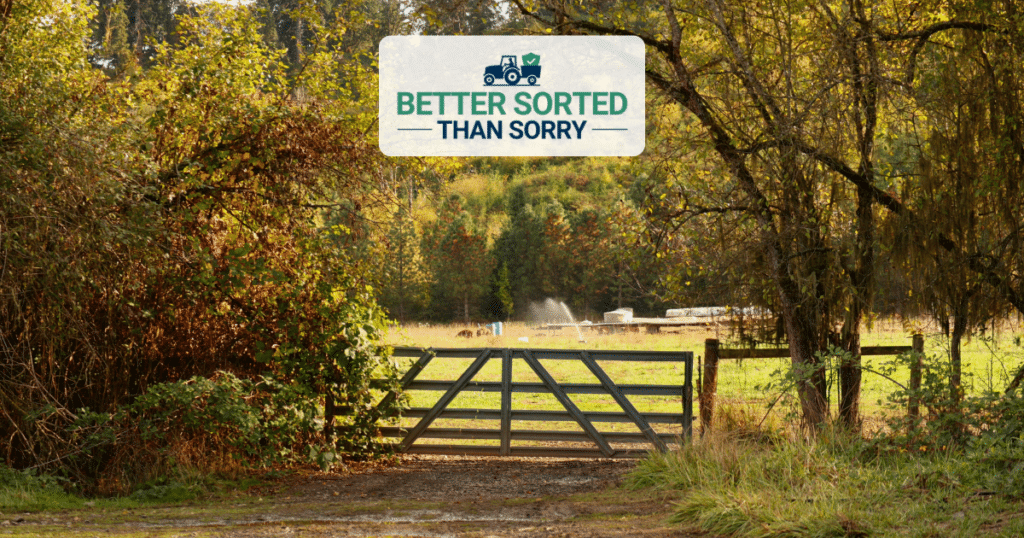
Check tracks, gateways and access routes
Wet weather can quickly change the condition of farm tracks and gateways. Soft ground, standing water, potholes and erosion can make routes more difficult to use and affect access to buildings, livestock and fields. Check the routes you rely on most and consider whether there are alternative ways to reach important areas of the farm if conditions deteriorate.
It’s also worth identifying areas that are more susceptible to flooding, such as low-lying fields, yards, buildings and access routes. If you’ve experienced flooding before, think about where the main problems occurred and whether anything could be addressed before the next period of heavy rain. For farms with livestock, consider where animals could be moved if a field or building became inaccessible and whether suitable alternatives are available.
Review your emergency plan
Heavy rain and flooding can affect more than just buildings and fields, so it’s worth considering how the farm would operate if access became difficult or parts of the site were affected. Think about livestock movements, access for emergency services, vulnerable buildings and equipment, and who needs to be contacted if there is a problem.
If your farm already has an emergency or flood plan, autumn is a good time to review it and make sure it still reflects how the farm operates. Previous flooding or periods of heavy rainfall can provide useful information about where additional preparation may be needed.
Make sure pumps and emergency equipment are ready. If you have pumps, water bowsers or other equipment used to manage water on the farm, check that they are ready before they are needed. Make sure equipment is maintained and operational, with fuel, hoses, connections and other essentials readily available.
Better Sorted Than Sorry
During October, our Better Sorted Than Sorry campaign focuses on changing weather, heavy rainfall and flooding. After such a dry summer, it might not seem like the obvious time to start thinking about flooding. But autumn provides an opportunity to look at the areas of your farm that could become more vulnerable once the ground becomes wetter. Being aware of the risks and dealing with them early can help keep your farm and your business better prepared for whatever the weather brings.
This information is provided for guidance only, and your exact requirements may differ depending on your individual circumstances. If you need further support, please contact our Risk Management team, who can help you identify and manage the risks relevant to your farm.