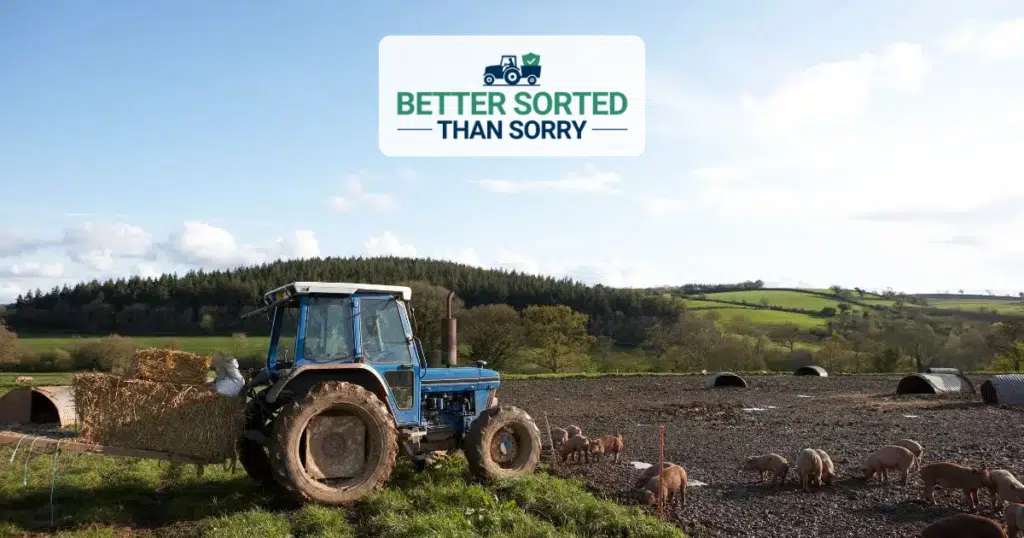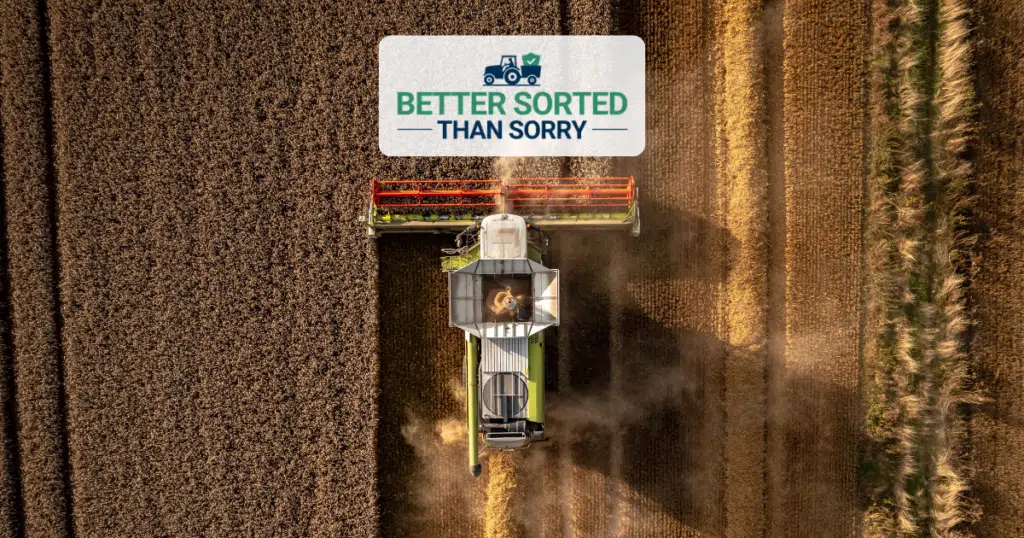
While no farm can remove risk entirely, having the right advice, support and insurance in place can help reduce the impact when problems arise.
At McClarrons, we support farming businesses not only when reviewing insurance arrangements and providing assistance when it comes to making a claim, but also by helping identify risks and sharing practical guidance that may help prevent losses from occurring in the first place.
Understanding the risks
As part of our Better Sorted Than Sorry campaign, we are encouraging farmers to identify risks before they become costly incidents. Understanding the most common causes of claims and taking preventative action can help reduce disruption, protect livelihoods and improve resilience. Some of the key risks facing farming businesses include:
1. Adverse Weather Conditions: Unpredictable weather patterns, such as storms, hail, frost, drought, or excessive rainfall can wreak havoc on crops, which we have been no stranger to over the past few years.
2. Equipment Damage: With a heavy reliance on the efficient functioning of equipment like combine harvesters, balers and tractors, unexpected issues can lead to devastating operational disruption, leading to delays and potential crop loss.
3. Fire and Theft: The dry nature of crops during harvest makes them vulnerable to fire hazards, which can destroy large areas of cultivated land. Additionally, the high value of equipment can attract theft, making it crucial to protect your investments.
4. Workplace Injuries: Farmers and their employees face inherent risks during agricultural operations, especially around the harvest period. It is therefore important to safeguard against this with Personal Accident cover, as well as Employers’ Liability cover, to protect you against any potential claims arising from work-related accidents or illnesses suffered by employees.
Understanding the challenges: overcoming obstacles in agricultural insurance claims
No matter how well prepared a farming business is, incidents can still occur. Machinery breakdowns, fire, theft, storm damage and workplace accidents can all have significant financial and operational consequences, particularly during busy periods like harvest.
When a loss does occur, navigating the complexities of agricultural insurance claims can be a daunting task. From understanding policy terms to documenting losses, farming businesses face various challenges that can impact their ability to receive timely compensation and, ultimately, get things back on track.
Here, we explore some of the common obstacles that can be encountered throughout the insurance claims process before discussing how you can look to manage and minimise these with our help.
1. Complex Claims Process: Filing an insurance claim can be a complex and time-consuming process. Many struggle to understand the intricacies of their insurance policy, the documentation requirements, and the claim settlement procedures, which is no surprise given the complexity of insurance. This lack of familiarity can lead to delays or complications in getting the compensation deserved.
2. Adequate Coverage Selection: Selecting the right insurance coverage tailored to your specific needs can be challenging. Without proper guidance, you may either overpay for unnecessary coverage or find yourself underinsured, leaving you vulnerable to substantial financial losses during the harvest season should you need to make a claim. Underinsurance can lead to insurers reducing claim payouts whilst overinsurance can lead to you paying for cover you do not need.
3. Documentation and Record Keeping: Maintaining detailed records and documentation of operations, including planting dates, crop health reports, accidents, and weather data, can be onerous. However, inaccurate or incomplete documentation can be detrimental to a future claim and delay the settlement process if pertinent evidence is not available.
4. Assessing Losses and Quantifying Damages: Determining the extent of losses and quantifying damages accurately can be a significant challenge. There is a lot to consider – for example, consider the assessment of crop damage, calculating the loss of yield, estimating costs of equipment repairs and so on. Uncertainty around these estimates, or being able to obtain accurate valuations will likely affect the outcome of your insurance claim.
How we can help
With over 35 years of experience handling agricultural insurance claims, McClarrons are here to provide farmers with the expertise and support they need.
With in-depth knowledge of the industry and a commitment to ‘Service Without Compromise,’ our team is dedicated to helping farmers navigate the claims process as smoothly and effectively as possible. Here are a few examples of how McClarrons can assist you with reaching a fair claim settlement:
1. Expert Knowledge and Guidance: We understand the complexities of insurance policies and can provide farmers with expert guidance throughout the claims process. Our team can help you understand your policy coverage, terms, and the claim procedures involved, alleviating confusion and making the processthat bit easier.
2. Tailored Coverage Solutions: We work closely with farmers to assess their unique risks and recommend the most suitable insurance coverage options for their needs. By understanding your operations, we can tailor policies to address the risks you face, providing you with comprehensive protection and minimising potential gaps in coverage.
3. Claims Assistance and Advocacy: McClarrons act as advocates for you during the claims process. As an independent brokerage, our team communicates directly with the insurance provider and claims adjusters on your behalf, acting in your best interests to facilitate as streamlined and fair a claims settlement as possible.
4. Loss Assessment and Valuation: With access to agricultural experts and industry professionals, McClarrons can look to assist you in obtaining accurate loss assessments to quantify damages accurately.
Insurance claims during the harvest season pose unique challenges; with our assistance, some of these challenges can be overcome. By leveraging our expertise, coverage solutions and claims assistance, farmers can navigate the claims process with confidence.
Better Sorted Than Sorry
Farming will always involve risk. Weather changes, machinery fails and unexpected incidents happen. However, many claims begin with small issues that could potentially have been identified earlier through routine maintenance, good housekeeping, regular reviews and practical risk management.
The purpose of Better Sorted Than Sorry isn’t to tell farmers how to farm; it’s about sharing practical advice that helps reduce avoidable losses and keeps rural businesses moving forward.
To find out more about how McClarrons can protect your farm and livelihood, or for a complimentary insurance review, please contact our Farm Team at farm@mcclarroninsurance.com or on 01653 609152.