
The care sector continues to evolve as providers respond to increasingly complex health needs within the communities they serve. One area that has received renewed public attention recently is encephalitis, following reporting by BBC News highlighting the lasting impact the condition can have on individuals and their families. Encephalitis, an inflammation of the brain usually caused by infection or an autoimmune response, can lead to significant long term physical, cognitive and behavioural effects. For many individuals, recovery is not simply a medical process but a lifelong journey that requires specialist rehabilitation and structured support.
For care providers operating within this space, particularly those delivering services to individuals with Acquired Brain Injury (ABI), the complexity of care needs can be substantial. Providers must balance clinical expertise, therapeutic rehabilitation, safeguarding responsibilities and regulatory oversight, all while maintaining a supportive environment for residents and their families.
At McClarrons, our Care & Social Welfare Team works with a broad spectrum of organisations across the care and social welfare sector, including providers delivering specialist neurological and complex care services. This includes facilities supporting individuals recovering from encephalitis and other forms of acquired brain injury.
The role of specialist care providers
Specialised care homes and rehabilitation facilities play a crucial role in supporting people living with the long term consequences of encephalitis. These services often provide multidisciplinary support that may include neurological rehabilitation, specialist nursing, physiotherapy, occupational therapy and psychological support. Organisations can deliver vital services that support residents with a wide range of needs. This can include cognitive impairment, behavioural changes, mobility challenges and ongoing medical management. As a result, the operational and clinical responsibilities carried by these providers are significant, and their insurance arrangements must reflect the realities of delivering such complex care.
The importance of specialist insurance advice
Care providers working with individuals who have experienced encephalitis, or other forms of acquired brain injury, face a unique risk profile. In addition to the standard exposures associated with residential care, organisations may be managing higher levels of clinical oversight, specialist equipment, therapy provision and enhanced safeguarding responsibilities.
Insurance arrangements therefore need to be carefully structured to reflect the nature of the services provided. This can include considerations around professional indemnity, medical malpractice, employers’ liability, safeguarding related liabilities and the protection of specialist equipment used in rehabilitation programmes.
Our team works closely with care providers to understand the operational detail of their services so that appropriate insurance cover can be arranged. This approach allows us to support organisations ranging from traditional residential care homes through to highly specialised neurological rehabilitation facilities.
A longstanding connection with Encephalitis International
Our interest in this area is also shaped by our longstanding relationship with Encephalitis International, and ability to support a charity dedicated to improving the lives of those affected by encephalitis through support, research and awareness.
The organisation plays a valuable role in supporting individuals and families impacted by the condition. Their work includes providing specialist information and advice, operating support services for survivors and carers, funding research into the causes and treatment of encephalitis, and raising awareness among healthcare professionals and the wider public.
McClarrons has also supported the charity through fundraising and volunteer activities across the business. Our team has taken part in a range of initiatives to raise both funds and awareness for the charity’s work, reflecting our wider commitment to supporting the communities connected to the sectors we serve.
Examples of McClarrons fundraising and support activities include:
McClarrons celebrate 32 years in business, whilst raising £631 for charity!
McClarrons celebrates Volunteer Recognition Day
Spreading awareness and wearing red for World Encephalitis Day
We recently spoke with Encephalitis International while preparing this article; they have kindly shared some information to help raise awareness of the condition and the support available to individuals and families affected by encephalitis.
World Encephalitis Day (WED), held annually on February 22nd, is one of the biggest days of the year for people whose lives have been affected by inflammation of the brain. Since its launch in 2014, WED has reached 225 million people directly in our efforts to grow international awareness of encephalitis. This year, for WED, Encephalitis International launched a lifesaving acronym: F.L.A.M.E.S, which reflects the urgent neurological signs that the general public and non-specialist acute medics should be aware of to help recognise encephalitis (inflammation of the brain) earlier.
F.L.A.M.E.S stands for:
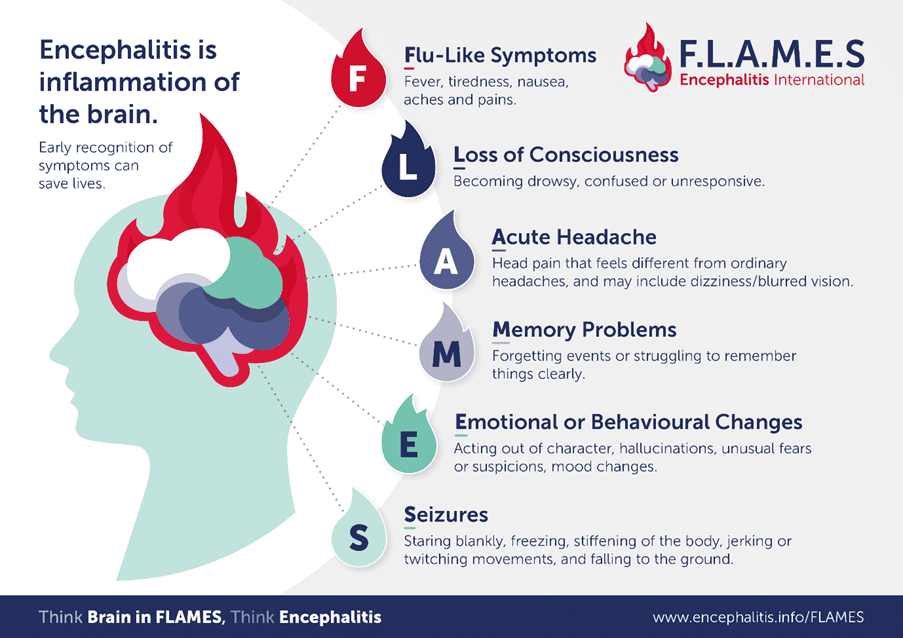
These are the symptoms most commonly found in both infectious and autoimmune causes of encephalitis.
Encephalitis affects three people every minute globally, yet almost 8-in-10 (77%) people do not know what it is. This lack of awareness can lead to delays in diagnosis and treatment, resulting in death and poorer patient outcomes.
Encephalitis International are asking the general public and non-acute medical specialists to engage with the F.L.A.M.E.S acronym and take note of the common symptoms that might indicate encephalitis – potentially saving a loved one’s life in the future. For more information, visit www.encephalitis.info or call the Encephalitis International team on 01653 699599.
Supporting the wider neurological care community
Organisations looking to identify specialist neurological care providers can turn to resources such as Headway UK, which maintains directories of approved care providers specialising in brain injury rehabilitation. Platforms such as carehome.co.uk also provide search tools that allow families and professionals to locate facilities specialising in ABI and neurological care.
For providers operating within this field, the demand for specialist services continues to grow as awareness improves and medical outcomes evolve. At the same time, the operational complexity of delivering this care requires experienced advice across multiple areas, including risk management and insurance.
Our Care & Social Welfare Team remains committed to supporting organisations that deliver these vital services. By working closely with care providers that support individuals affected by conditions such as encephalitis, we aim to ensure that their insurance arrangements properly reflect the critical work they undertake every day. For guidance on your insurances or a complimentary review, contact our specialist Care & Social Welfare Team on 01653 600477 or at care@mcclarroninsurance.com.